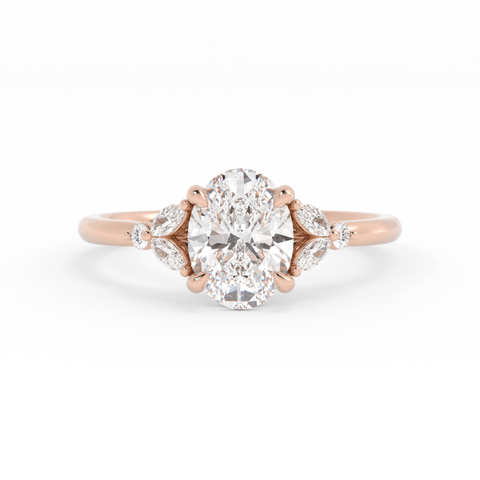
Collection: Lab Grown Diamond Three Stone Engagement Rings
Three lab grown diamonds, one story — past, present, and future on a single band. The trilogy ring, without the trilogy price.
-
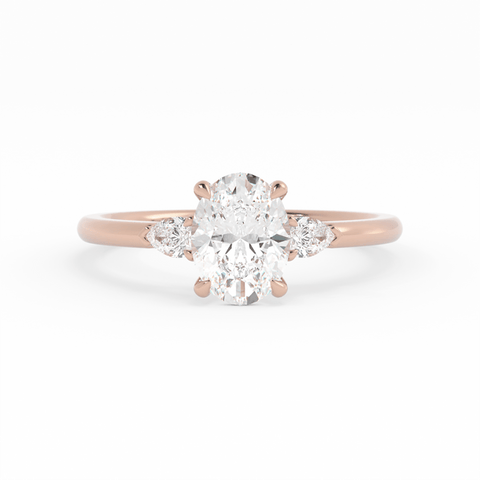
Anastasia
1ct Oval Lab Grown Diamond in 18K Rose Gold
Regular price $1,819Regular price$1,819Sale price $1,819 -
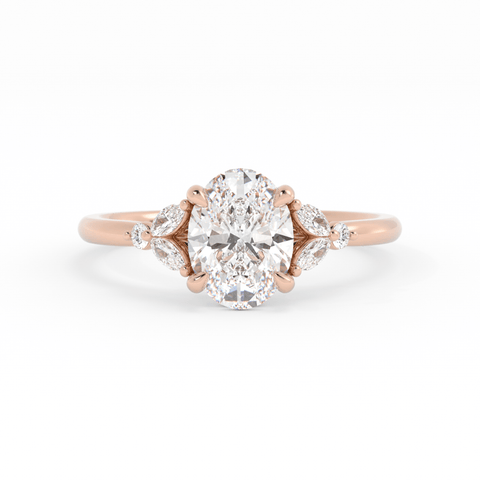
Clara
1ct Oval Lab Grown Diamond in 18K Rose Gold
Regular price $1,585Regular price$1,585Sale price $1,585 -
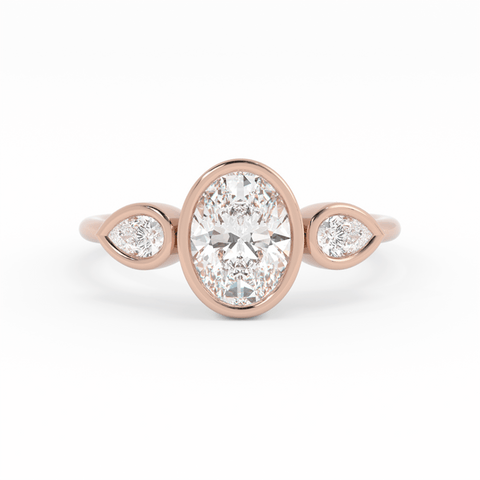
Nova
1ct Oval Lab Grown Diamond in 18K Rose Gold
Regular price $1,445Regular price$1,445Sale price $1,445 -
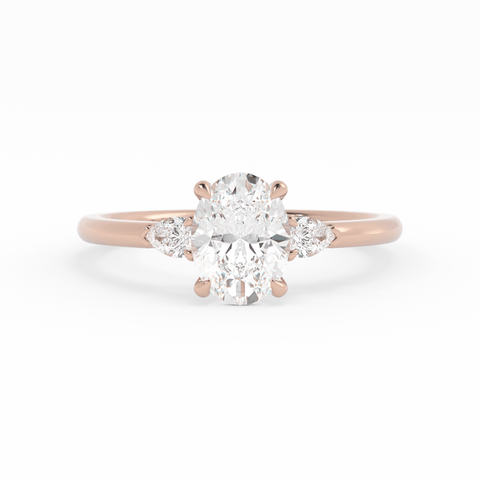
Anastasia
1ct Oval Lab Grown Diamond in 10K Rose Gold
Regular price $1,465Regular price$1,465Sale price $1,465 -
Clara
1ct Oval Lab Grown Diamond in 10K Rose Gold
Regular price $1,329Regular price$1,329Sale price $1,329 -
Nova
1ct Oval Lab Grown Diamond in 10K Rose Gold
Regular price $1,169Regular price$1,169Sale price $1,169
The three stone ring is the most narrative engagement ring design: a center diamond flanked by two companions, traditionally read as past, present, and future. It is also, carat for carat, the most diamond-intensive style — which is exactly why lab grown diamonds change the math. In a natural trilogy, every carat added to the side stones multiplies the cost; with lab grown pricing, a fully proportioned three stone ring — substantial center, generous sides — lands where a natural version of the same design cannot. No style benefits more from the lab grown per-carat advantage, because no style asks for more diamond.
Luvari's lab grown diamond three stone rings are available in yellow gold, white gold, rose gold, and platinum, with certified center stones across our full shape range and side stones proportioned to match. Settings can be tailored through the semi-custom process. This collection suits the romantic with a sense of scale — a buyer drawn to the symbolism of three stones who wants each of them to hold its own.
Frequently Asked Questions About Lab Grown Diamond Three Stone Engagement Rings
The three stones are traditionally read as past, present, and future — the relationship's full arc on one band. Structurally, the design sets a larger center diamond between two flanking side stones, which also widens the ring's sparkle across the finger. In this collection all three stones are lab grown diamonds, chemically identical to mined ones.
Because the style multiplies diamond content, it multiplies the lab grown price advantage. Side stones that would strain a natural-diamond budget become straightforward at lab grown pricing, so the ring can be proportioned the way the design intends — a confident center with substantial companions — rather than shrunk to fit. The savings compound across all three stones.
Yes — the stones sit in a low, connected row rather than standing tall, and diamond hardness handles daily life easily. Three stones do mean more prongs to maintain than a solitaire, so an annual inspection matters, and the wider face-up spread can catch on knits if prongs loosen. Well-kept, it is among the most wearable statement styles.
Luvari offers lab grown diamond three stone rings in 14k and 18k yellow gold, white gold, and rose gold, as well as platinum. Certified center stones span the full shape range — round, oval, cushion, emerald cut, and fancy shapes — with side stones proportioned and shaped to complement each center. Configurations can be tailored through the semi-custom process.
Matching shapes — a round center with round sides — reads classic and symmetrical. Contrasting pairings add character: pear side stones taper elegantly away from oval and round centers, tapered baguettes give emerald cuts an Art Deco line, and half-moons hug cushions closely. The strongest pairings keep the side stones clearly subordinate, roughly a quarter to a third of the center's size.