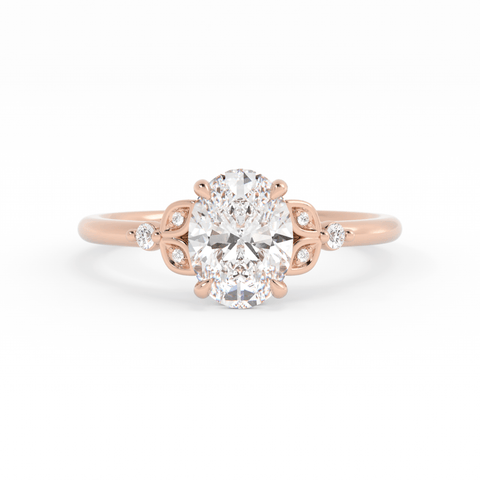
Collection: Side-Stone Engagement Rings
A center stone with company — accents set beside it, traced along the band, or both. Every other stone on the ring is there to make the middle one look better.
-
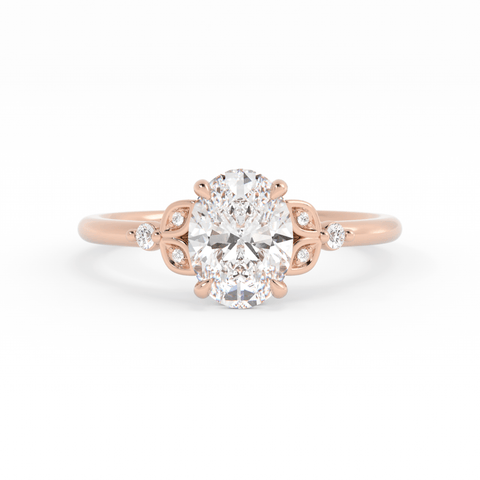
Auriel
1ct Oval Natural Diamond in 10K Rose Gold
Regular price $6,755Regular price$6,755Sale price $6,755 -
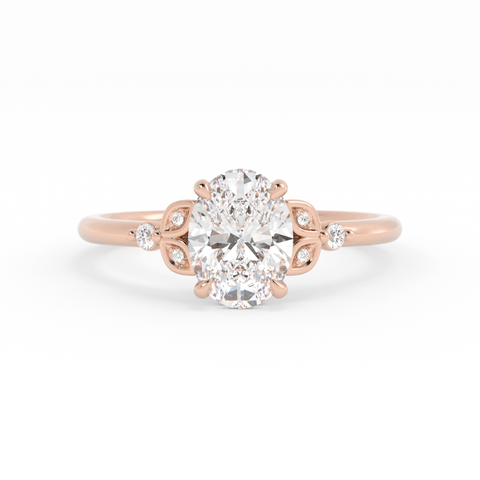
Polaris
1ct Oval Lab Grown Diamond in 14K Rose Gold
Regular price $1,159Regular price$1,159Sale price $1,159 -
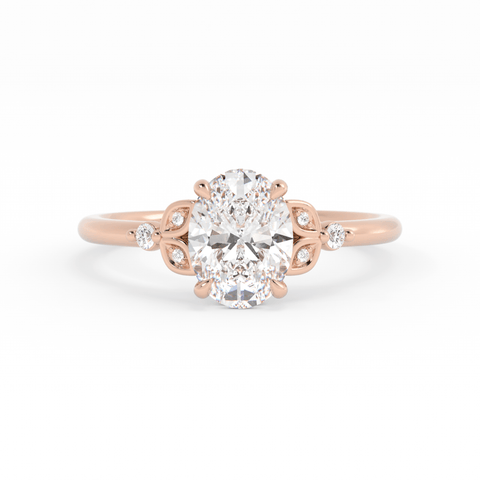
Polaris
1ct Oval Natural Diamond in 14K Rose Gold
Regular price $6,029Regular price$6,029Sale price $6,029 -
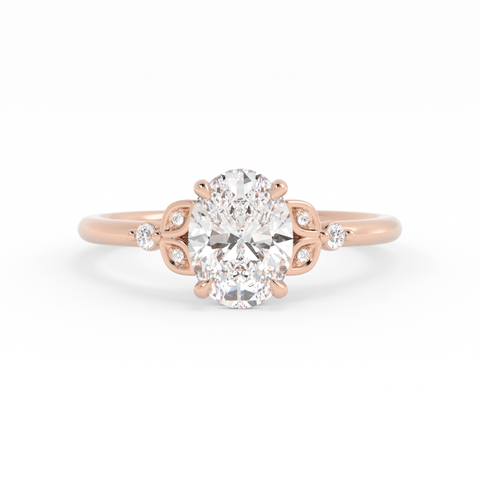
Polaris
1ct Oval Lab Grown Diamond in 18K Rose Gold
Regular price $1,340Regular price$1,340Sale price $1,340 -
Polaris
1ct Oval Natural Diamond in 18K Rose Gold
Regular price $6,130Regular price$6,130Sale price $6,130 -
Polaris
1ct Oval Lab Grown Diamond in 10K Rose Gold
Regular price $1,070Regular price$1,070Sale price $1,070 -
Polaris
1ct Oval Natural Diamond in 10K Rose Gold
Regular price $5,935Regular price$5,935Sale price $5,935
Side-stone engagement rings surround a center stone with smaller accents that work in its service — flanking it at the shoulders, tracing the band in pavé or channel-set rows, or both at once. What defines the style is hierarchy: unlike a three stone ring's substantial companions or a halo's encircling frame, side-stone accents stay clearly subordinate, adding brilliance and dimension while the center stone remains unmistakably in command. It is the middle path of engagement ring design — more presence than a solitaire, more restraint than a halo.
Luvari's side-stone engagement rings are offered in yellow gold, white gold, rose gold, and platinum, with center stones spanning lab grown diamonds, natural diamonds, moissanite, and colored gemstones across our full range of shapes. Accent configurations run from delicate beaded pavé to sleek channel settings, tailored through our semi-custom process. The style suits someone who finds a plain band unfinished but a halo too much — a buyer who wants their ring finished, not framed.
Explore Other Engagement Ring Styles
- Solitaire Engagement Rings
- Halo Engagement Rings
- Hidden Halo Engagement Rings
- Three Stone Engagement Rings
- Bezel Engagement Rings
- Unique Engagement Rings
- Engagement Rings
Explore Engagement Rings by Center Stone Shape
Frequently Asked Questions About Side-Stone Engagement Rings
A side-stone engagement ring surrounds its center stone with smaller accent stones — set beside it at the shoulders, along the band, or both. The accents stay clearly subordinate to the center, which is what separates the style from a three stone ring's substantial companions or a halo's encircling frame. One stone commands; everything else supports.
Yes, though more subtly than a halo does. Accents at the shoulders extend the ring's face-up spread outward from the center, and a set band draws the eye toward it, so the whole composition reads more substantial than the center alone would. The center's actual outline stays honest — enhanced, not disguised.
Well, with placement determining the upkeep. Accents flanking the center sit relatively sheltered, while band-set stones live where hands grip and knock — channel settings protect those best, beaded pavé trades protection for delicacy. An annual inspection of all accents and the center's prongs keeps the ring secure through decades of wear.
Luvari offers side-stone engagement rings in 14k and 18k yellow gold, white gold, and rose gold, as well as platinum, with center stones spanning lab grown diamonds, natural diamonds, moissanite, and colored gemstones. Every shape in our range is available — round, oval, cushion, emerald cut, and fancy shapes — with accent configurations from pavé to channel set, tailored through the semi-custom process.
No — mixing is standard practice. Diamond accents around a moissanite or gemstone center are common, since small accents read as white sparkle regardless of type, and matched accents are equally available for buyers who want the ring uniform throughout. What matters visually is color consistency across the accents themselves, so the supporting cast reads as one voice.