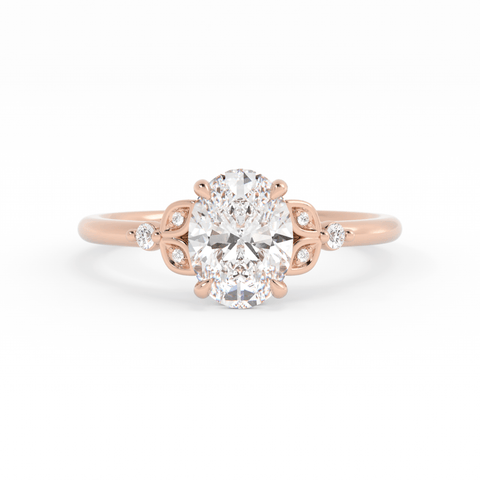
Collection: Oval Cut Engagement Rings
The round brilliant, stretched toward drama. Ovals spread more stone across the finger per carat — elegance with better math.
-
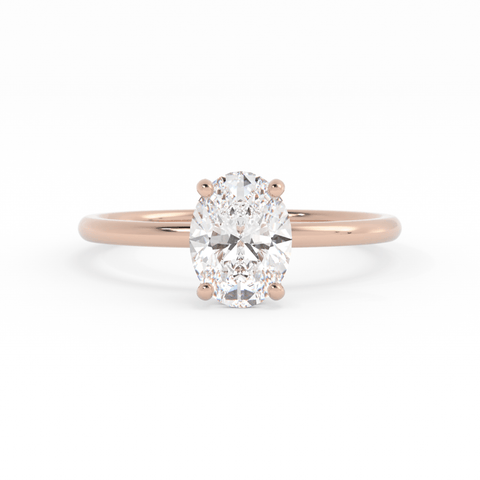
Mia
1ct Oval Lab Grown Diamond in 10K Rose Gold
Regular price $1,355Regular price$1,355Sale price $1,355 -
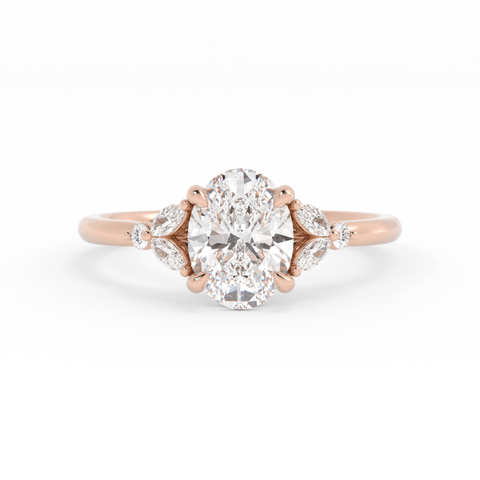
Nova
1ct Oval Lab Grown Diamond in 10K Rose Gold
Regular price $1,169Regular price$1,169Sale price $1,169 -
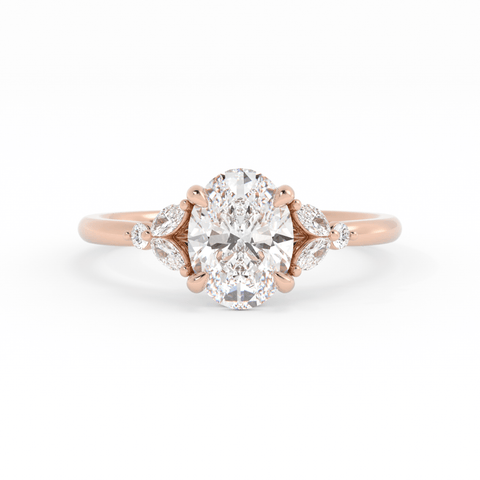
Nova
1ct Oval Natural Diamond in 10K Rose Gold
Regular price $6,059Regular price$6,059Sale price $6,059 -
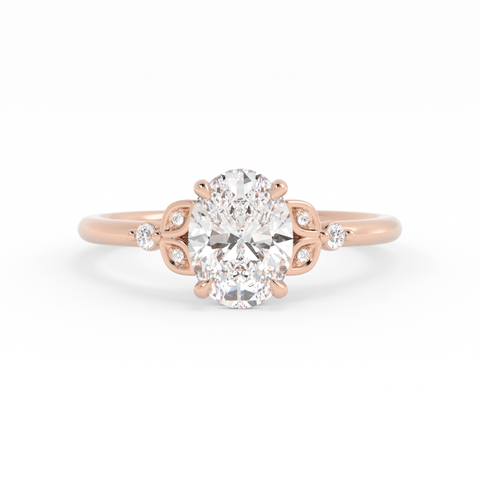
Polaris
1ct Oval Lab Grown Diamond in 10K Rose Gold
Regular price $1,070Regular price$1,070Sale price $1,070 -
Polaris
1ct Oval Natural Diamond in 10K Rose Gold
Regular price $5,935Regular price$5,935Sale price $5,935
The oval is the round brilliant's elongated sibling — the same light-optimized faceting, drawn into a shape that works harder per carat. An oval spreads its weight across more face-up area than a round of equal size, so the stone reads larger on the hand, and its lengthwise line draws the finger longer and slimmer as it goes. That combination of brilliance, spread, and flattery made the oval the defining shape of the current engagement ring era, and its momentum shows no sign of spending itself.
Luvari's oval cut engagement rings are offered in yellow gold, white gold, rose gold, and platinum, with center stones spanning lab grown diamonds, natural diamonds, moissanite, and colored gemstones, across every setting style we make — each halo, trilogy, and bezel shaped to follow the oval's line. Details can be tailored through our semi-custom process. The oval suits the buyer who wants classic brilliance with a visible point of view — presence that never has to raise its voice.
Explore Other Engagement Rings by Center Stone Shape
- Round Cut Engagement Rings
- Cushion Cut Engagement Rings
- Emerald Cut Engagement Rings
- Alternative Cut Engagement Rings
- Engagement Rings
Explore Engagement Rings by Style
Frequently Asked Questions About Oval Cut Engagement Rings
An oval cut is a brilliant-faceted stone in an elongated, symmetrical curve — essentially the round brilliant's light architecture stretched lengthwise. It keeps most of the round's sparkle while adding an elongating line across the finger. The shape has become the signature of the modern engagement ring era, second only to the round in popularity.
Yes — an oval distributes its carat weight across a larger face-up area, typically reading around ten percent larger than a round of equal weight. Its elongated outline also occupies more of the finger's visible width. Combined with a generally friendlier price per carat, the oval delivers the most apparent size per dollar among the classic shapes.
The bow-tie is a shadowy band across an oval's middle where light escapes rather than returning — a structural trait of all elongated brilliants, not a flaw unique to any stone. Every oval has some; well-cut stones minimize it to a whisper. The practical answer is simple: view the actual stone, ideally in video or person, before committing.
Luvari offers oval cut engagement rings in 14k and 18k yellow gold, white gold, and rose gold, as well as platinum, across every setting style we make — solitaire through unique designs — with center stones spanning lab grown diamonds, natural diamonds, moissanite, and colored gemstones in a wide range of carat weights. Details are tailored through the semi-custom process.
Most buyers land between 1.3 and 1.5 — elongated enough to flatter, balanced enough to avoid reading narrow. Lower ratios approach a rounded softness; higher ones stretch toward drama and show more bow-tie risk. There is no single correct number: the right ratio is the one that suits the wearer's finger and taste, seen on the hand.